 Trent Pehrson
An exploration of custom inks, aged paper, and manuscript illumination in the Celtic tradition
Explore the Exhibit Home About This Exhibit About the Artist
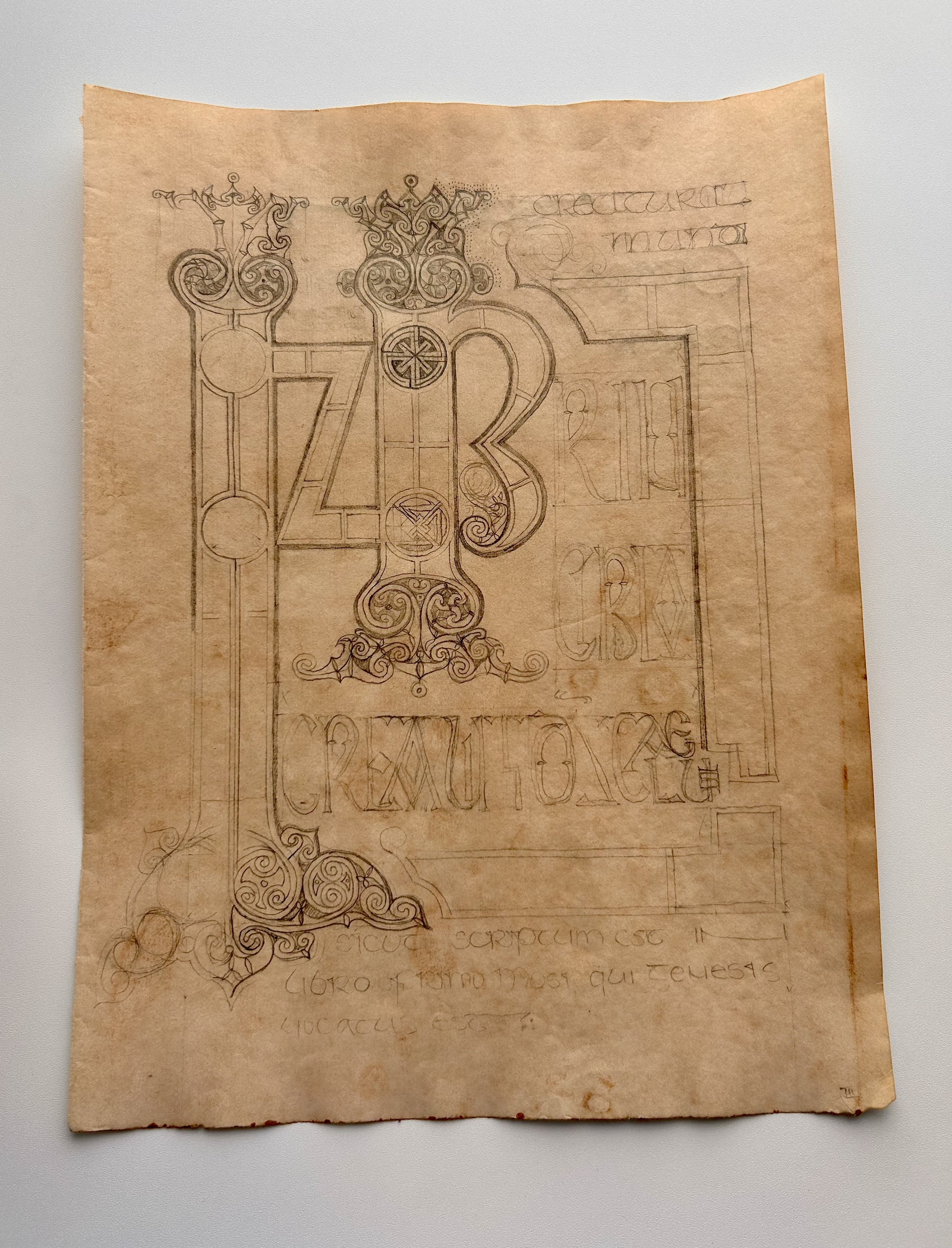
Calligraphy Study II is an experimental exploration of the materials,
techniques, and visual conventions associated with manuscript production
in the Celtic tradition. The study investigates the development of custom
inks, methods of artificially aging paper, and the integration of calligraphy,
illustration, and ornament into a unified manuscript aesthetic. Rather than
reproducing a particular historical manuscript, the work explores how
elements of this tradition might be adapted through contemporary
experimentation.
A central concern of the study is the relationship between materials and
visual expression. Experiments with ink formulations, pigments, and paper
treatments investigate how color, texture, and surface irregularities
contribute to the character of a manuscript. The aged paper evokes the
appearance of historical documents, while the contrasting pigments and
decorative marks explore the visual possibilities of writing and
illumination on such surfaces.
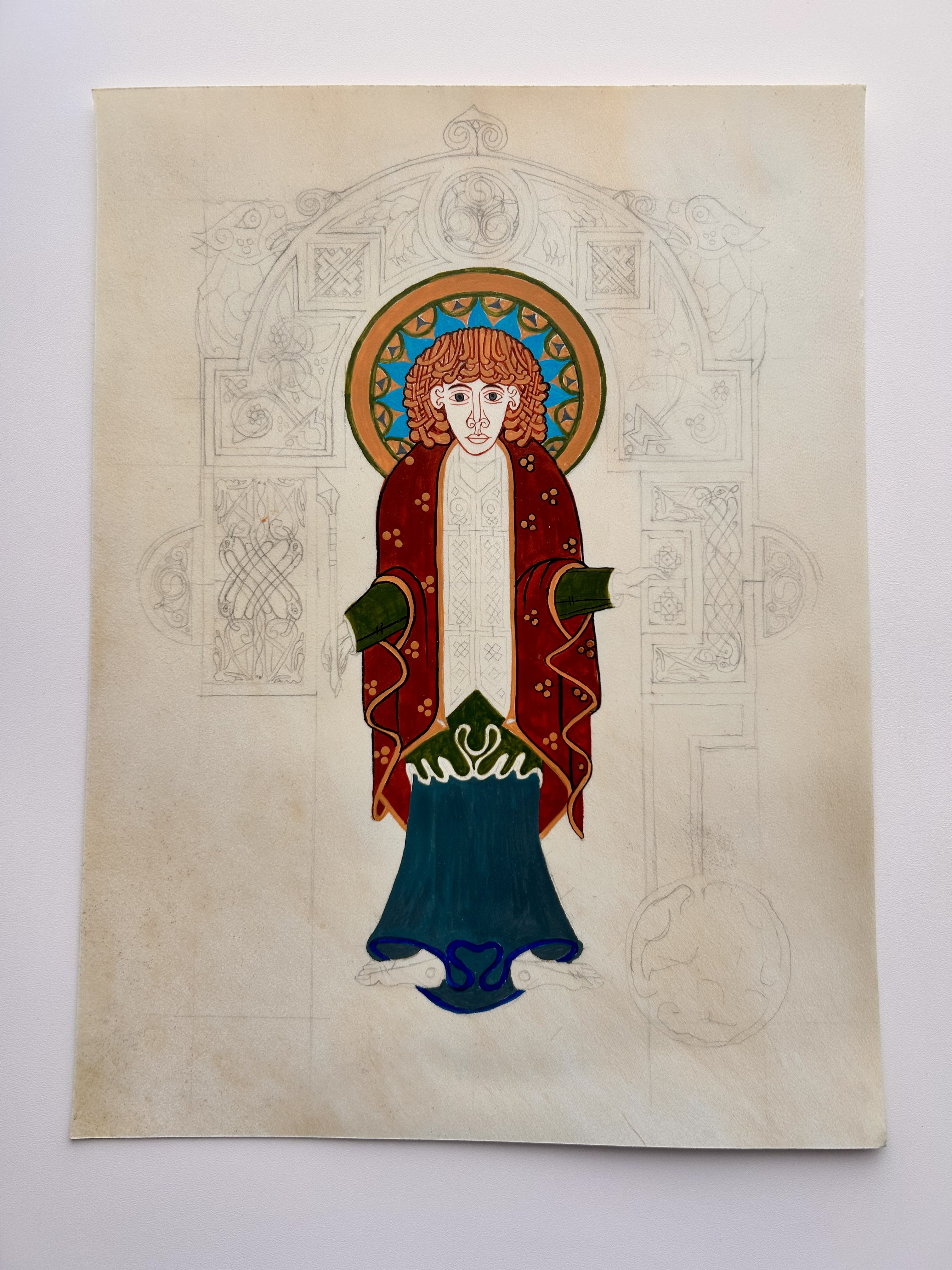
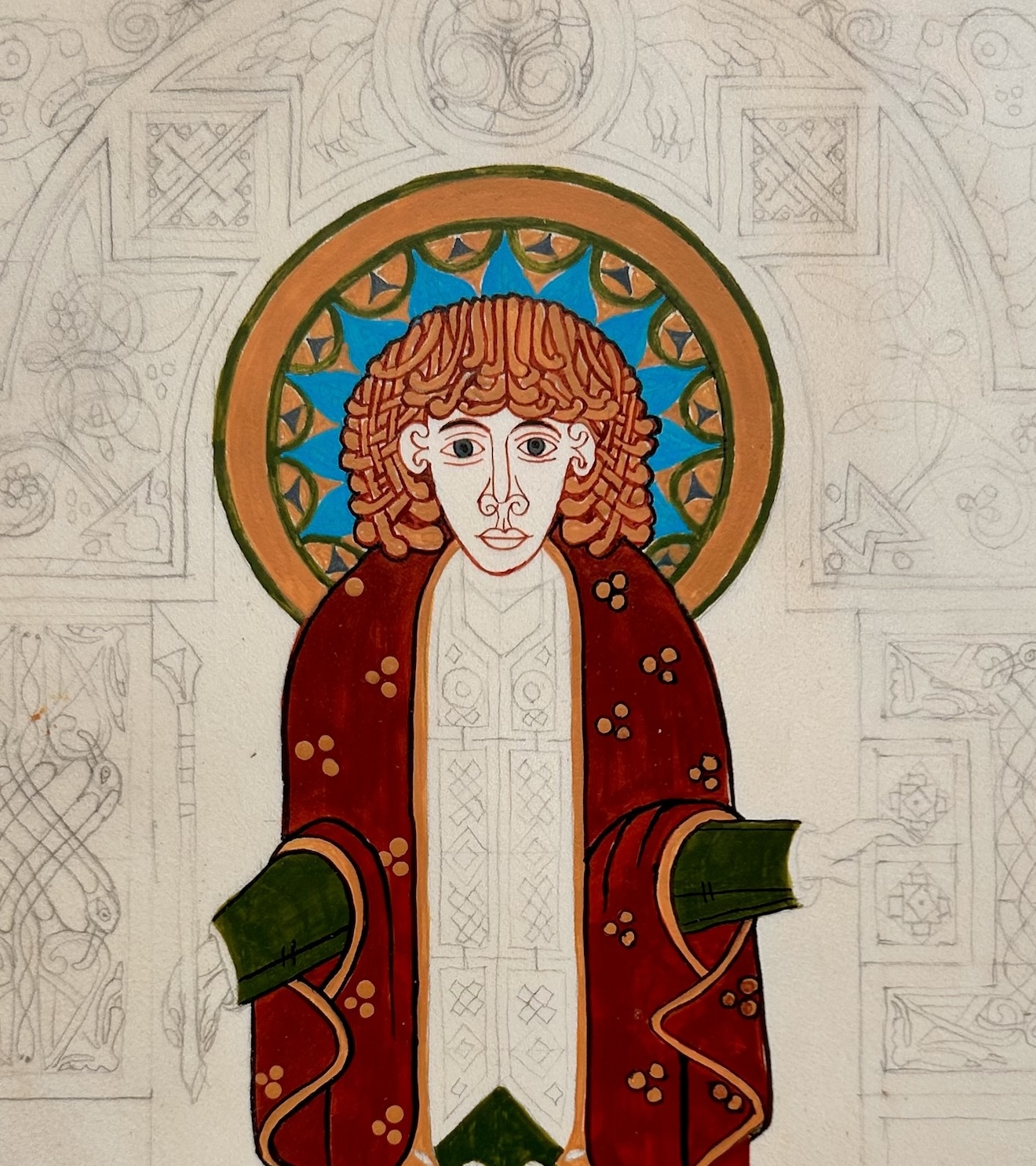
The figurative and ornamental compositions draw upon the rich visual
language associated with Celtic manuscript illumination. Stylized human
figures, animal motifs, geometric patterns, and elaborate decorative
structures are arranged alongside calligraphic experiments. Some areas
remain in preliminary pencil while others are developed in vivid color,
exposing the process through which an illuminated composition takes
shape. This juxtaposition of finished and unfinished elements emphasizes
the work's investigative nature.
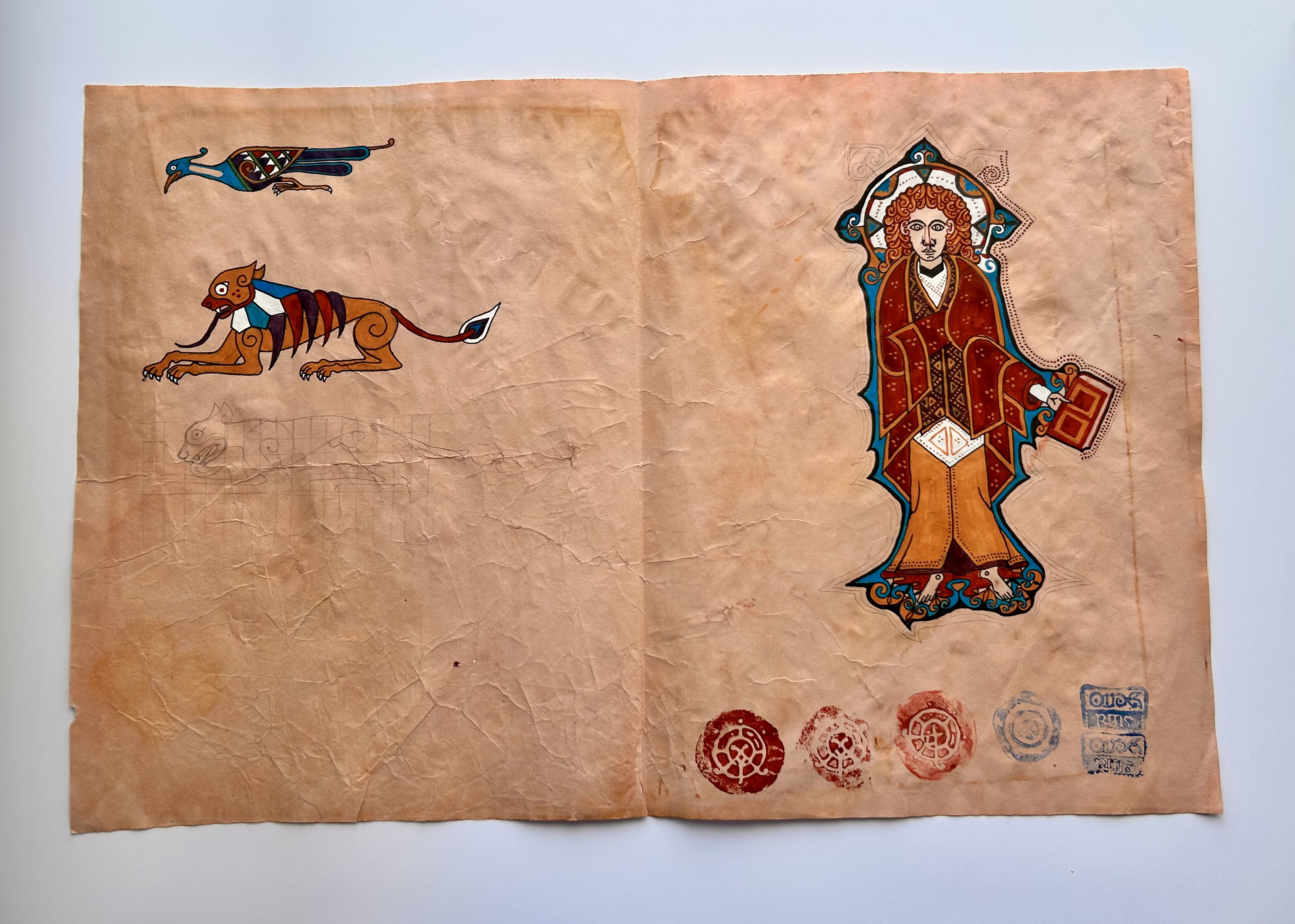
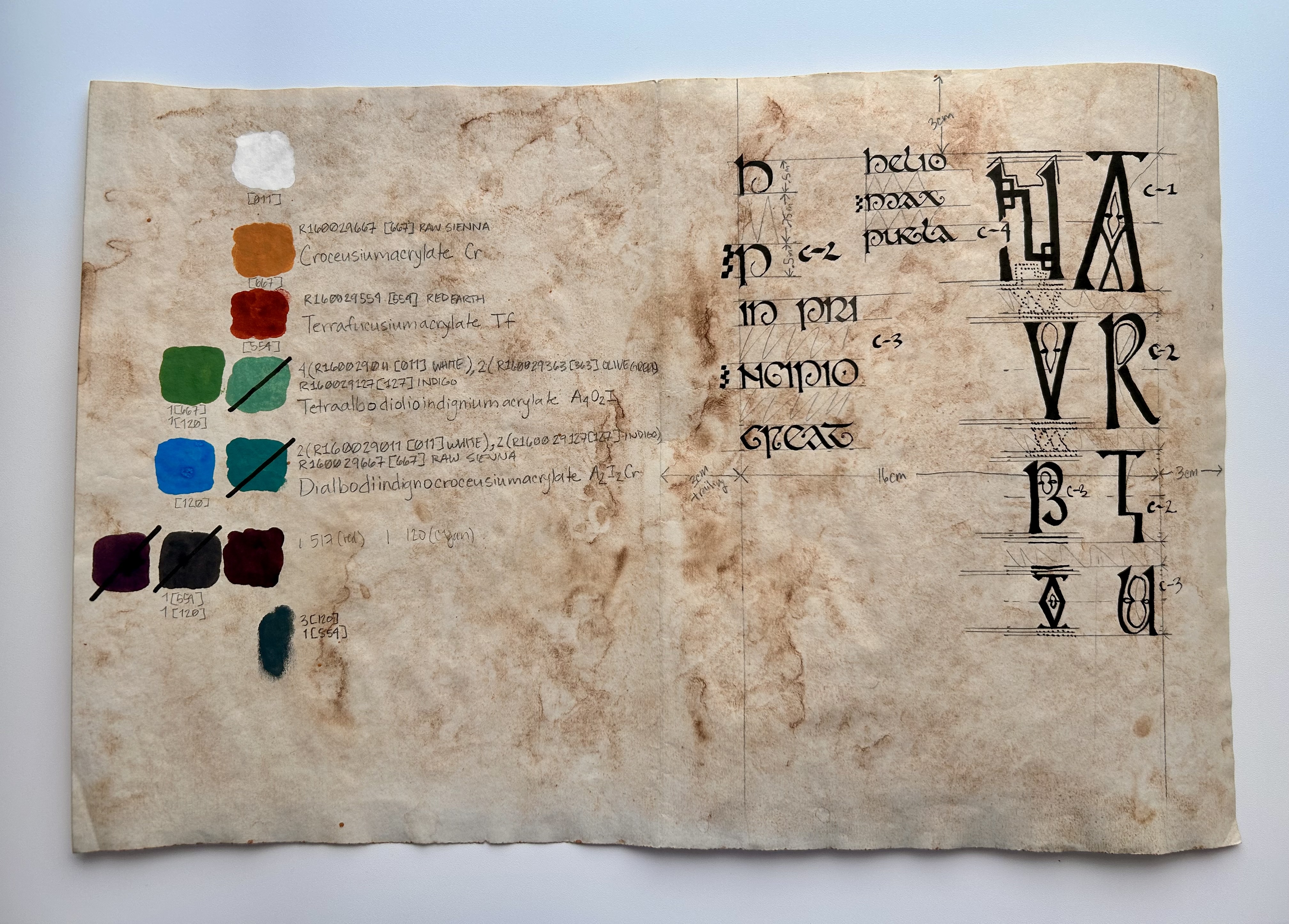
The collection also includes a sheet of ink and color tests documenting
experiments with lettering, pigment, and surface treatment. Among these
marks appears the first rendition of Trent Pehrson's calligraphic seal,
an early exploration of a personal artistic insignia within the broader
practice of decorative writing.
As a study, Calligraphy Study II is concerned with developing the
practical and aesthetic foundations for a larger manuscript project.
It examines how the physical properties of ink and paper, together with
the expressive possibilities of calligraphy and illumination, can
contribute to the creation of an object that is both a vehicle for
written language and a work of visual art.