 Trent Pehrson
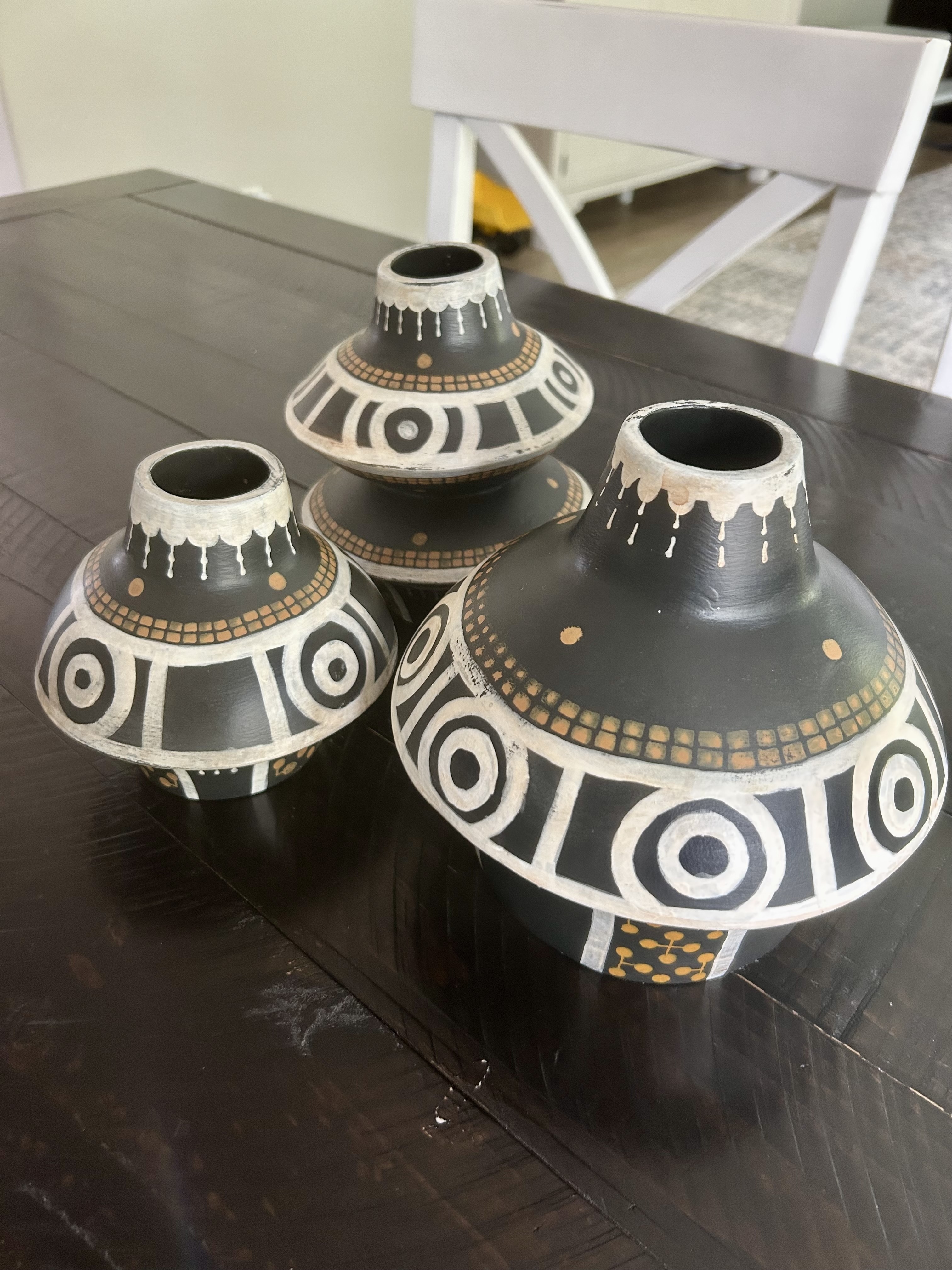
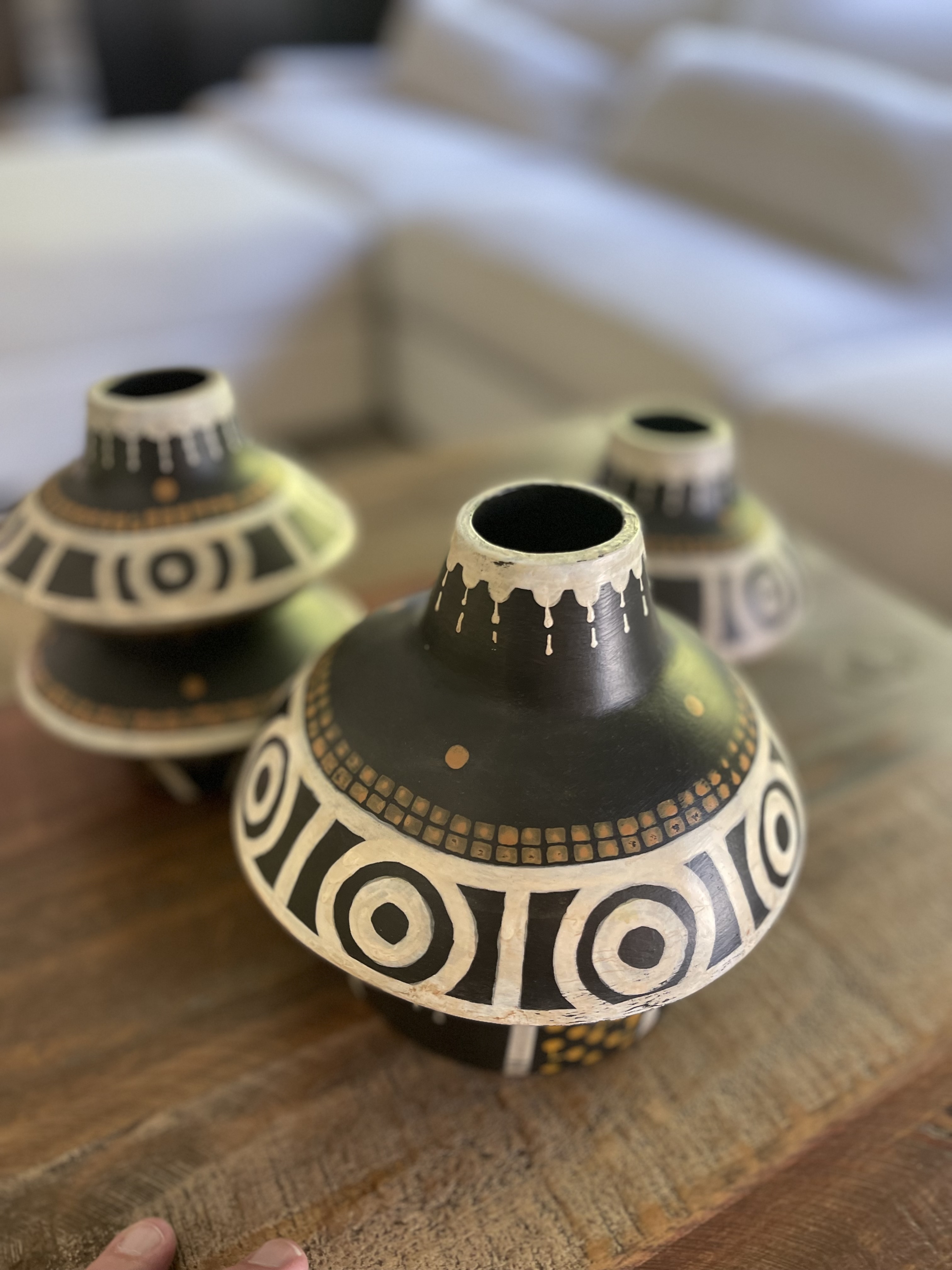
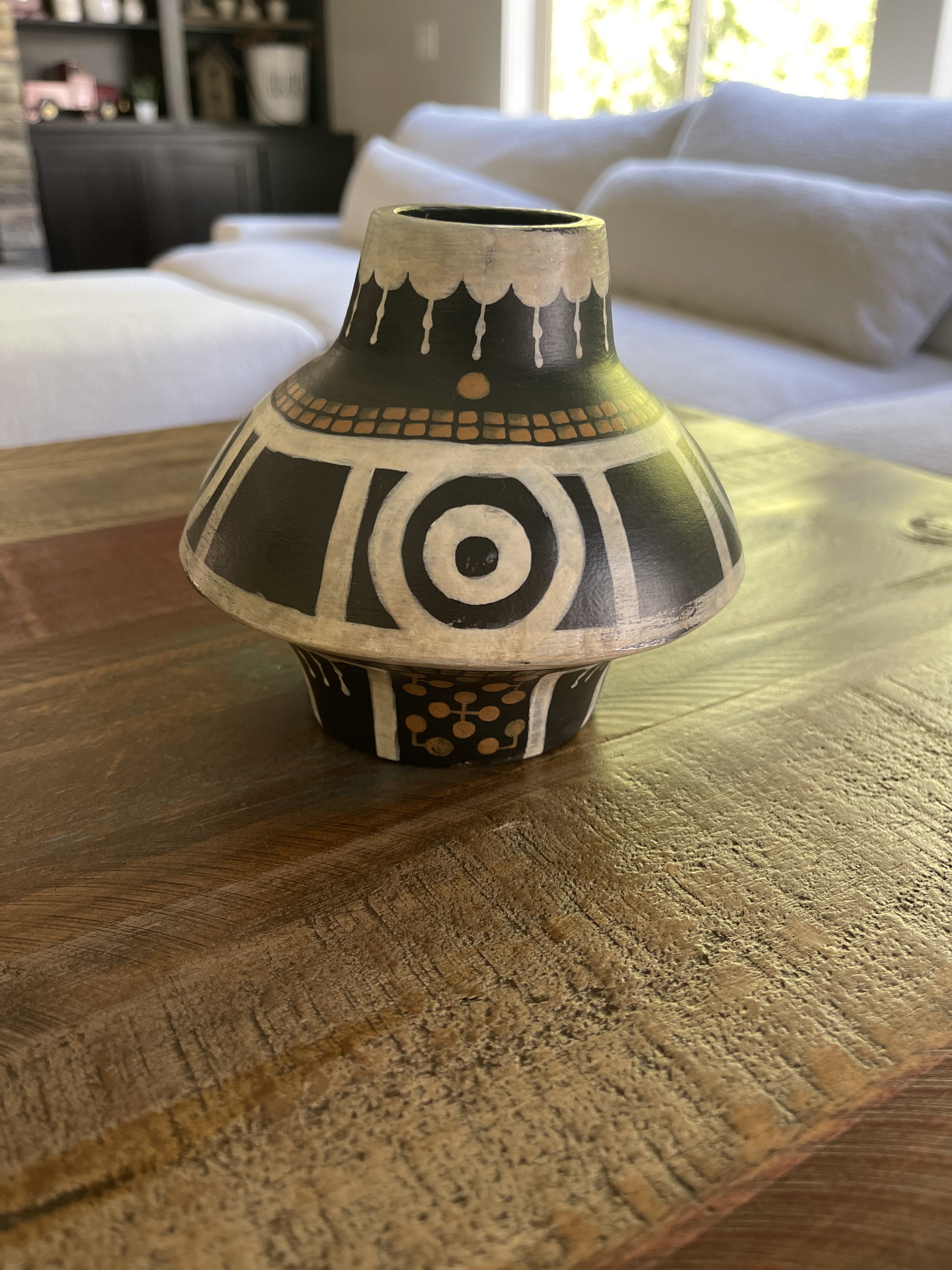
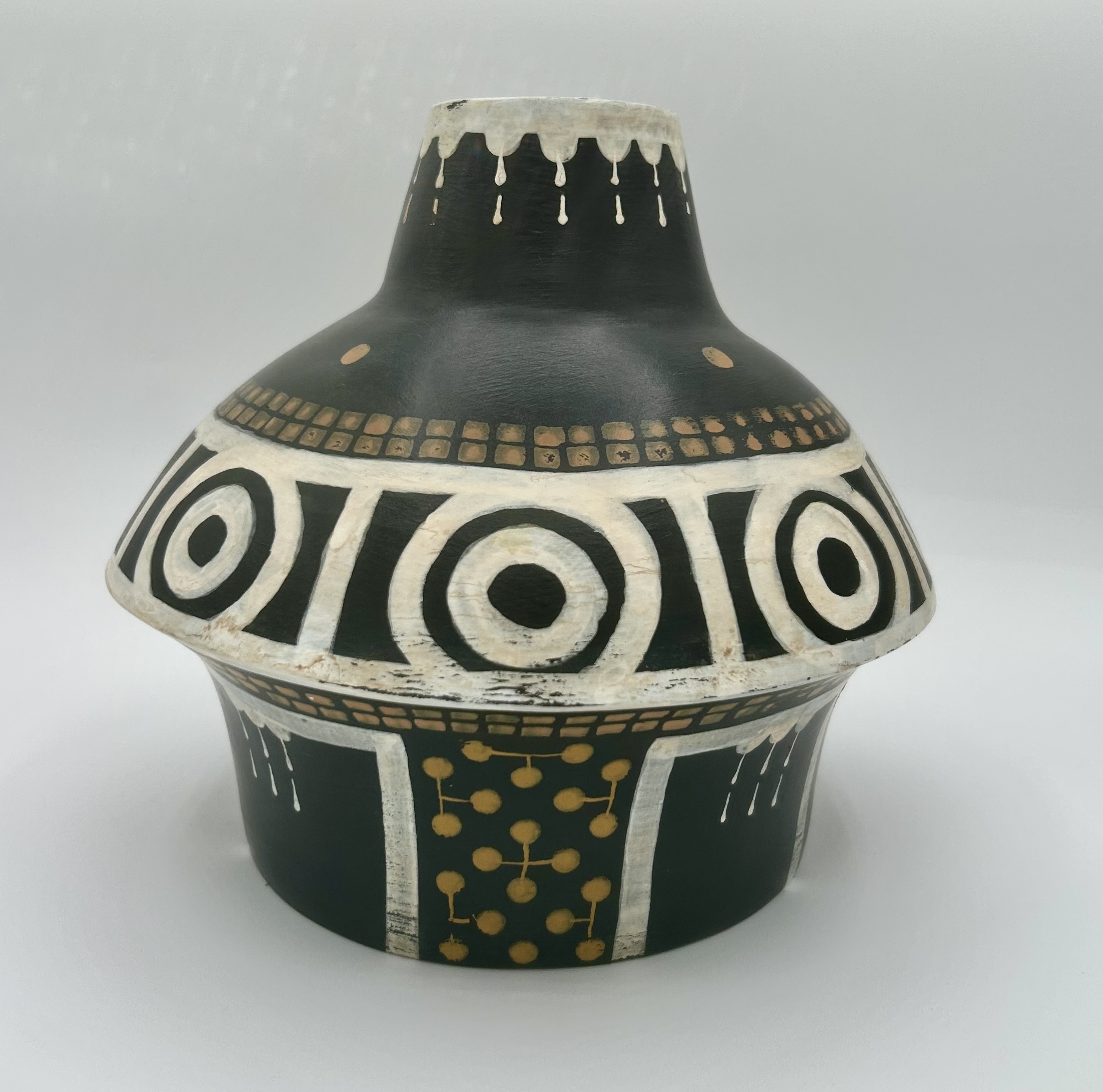
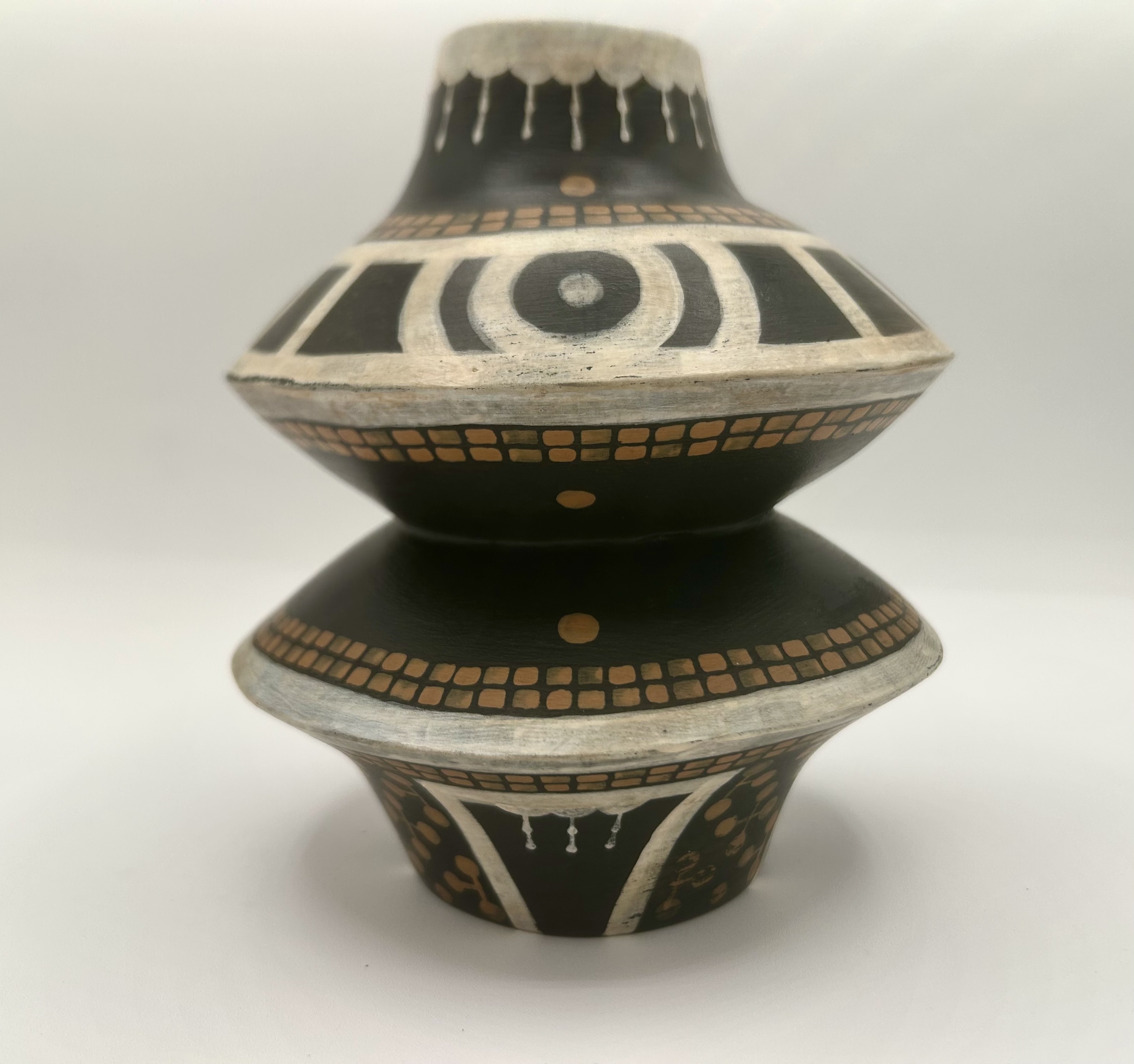
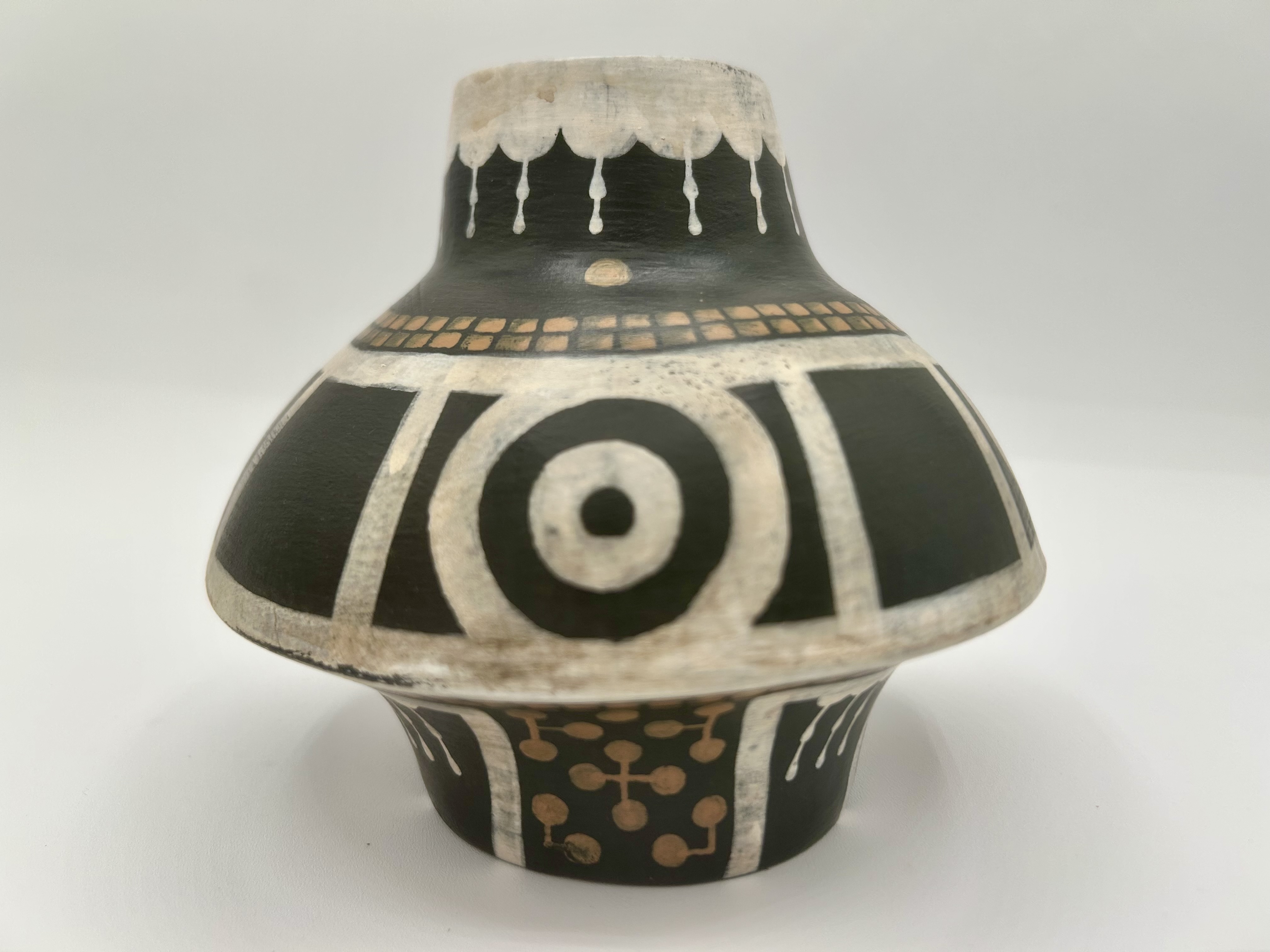
Three sculptural ceramic jugs combining dramatic black surfaces with white and yellow geometric ornamentation
Explore the Exhibit Home About This Exhibit About the Artist
Tribal Jugs is a collection of three sculptural
ceramic vessels distinguished by their bold silhouettes
and contrasting geometric ornamentation. Finished
predominantly in black, the jugs incorporate white
decorative bands and smaller yellow accents that
emphasize the relationship between surface pattern
and three-dimensional form. The collection explores
the expressive possibilities of vessel design,
geometric abstraction, and ornamental rhythm.
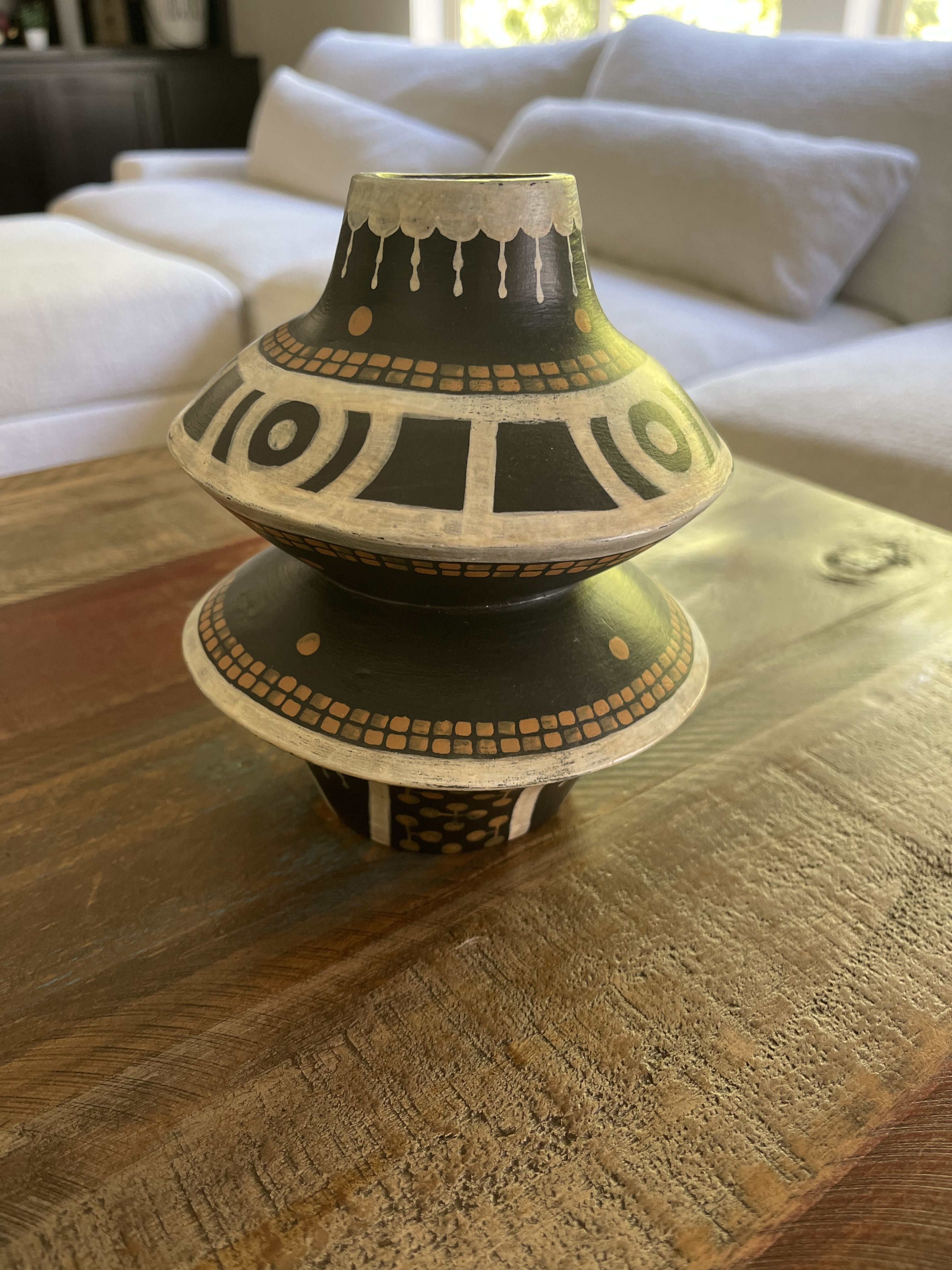
Although the three jugs were conceived as a coordinated
set, each possesses a distinctive sculptural character.
Their forms feature narrow necks, angular shoulders,
expanding middle sections, and tapered or rounded
lower bodies. These variations establish individual
identities while preserving a shared visual language.
The resulting collection balances repetition and
variation, allowing the vessels to function both as
independent sculptural objects and as members of a
unified group.
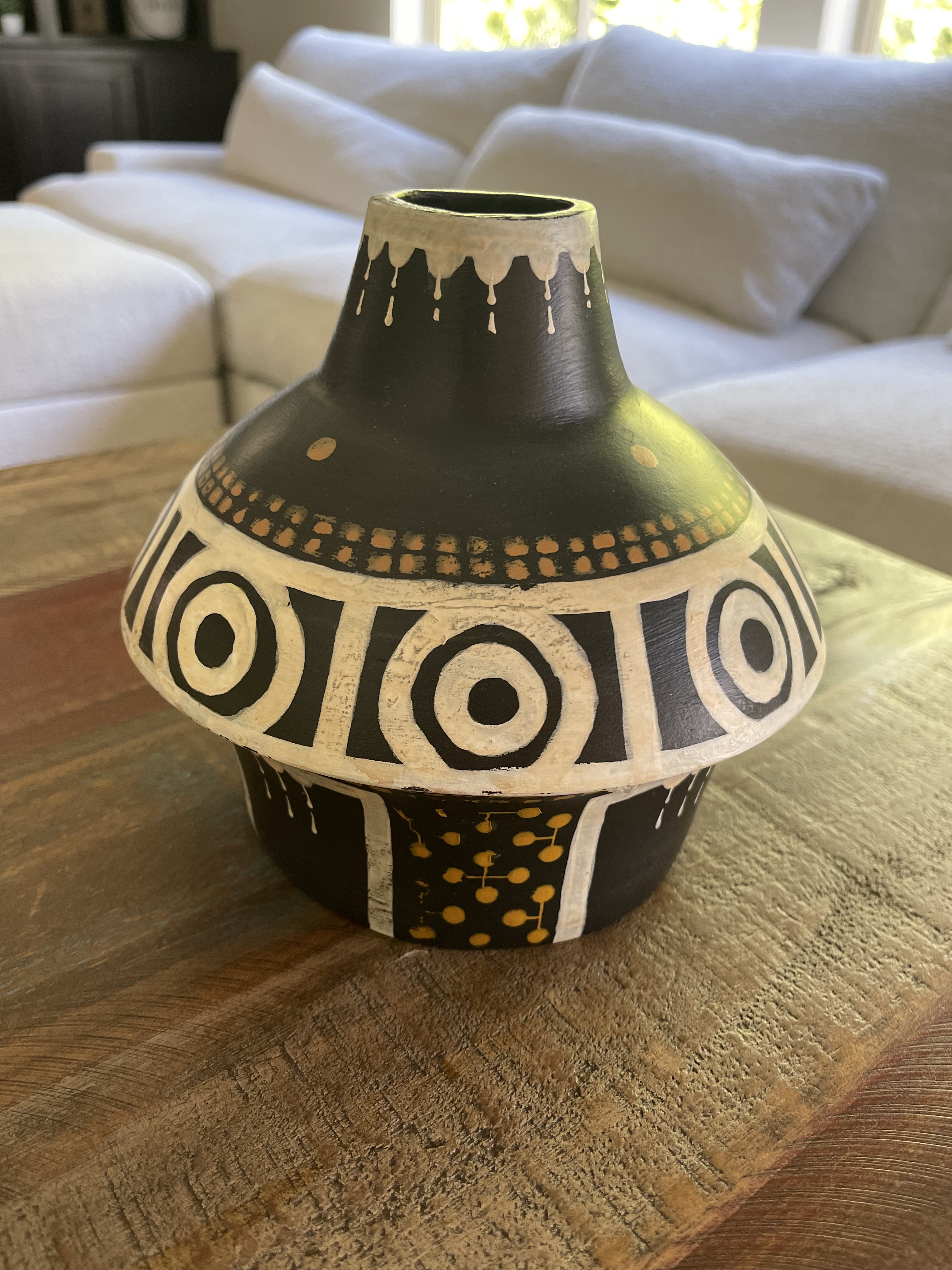
The ornamentation is built around a vocabulary of
circles, concentric rings, triangular divisions,
horizontal bands, vertical markings, and dotted
accents. The strong contrast between black and
white gives the designs immediate graphic clarity,
while the smaller yellow elements introduce warmth
and a secondary level of visual detail. Repetition
creates rhythm across the surfaces, but the changing
curvature of each vessel prevents the patterns
from appearing entirely static.
An important aspect of the work is the relationship
between decoration and structure. The broadest
ornamental bands frequently occupy the expanding
shoulders of the jugs, emphasizing their silhouettes.
Narrower patterns follow the necks and lower sections,
helping articulate transitions between the various
sculptural volumes. In this way, the ornamentation
does more than embellish the vessels: it reinforces
and interprets their physical construction.
The visual language of the collection draws upon
the broad expressive qualities associated with
geometric and tribal-inspired ornament, including
symmetry, repetition, symbolic-looking forms, and
strong contrasts of color. The designs are presented
here as original decorative compositions rather
than as representations of a particular historical
or cultural tradition.
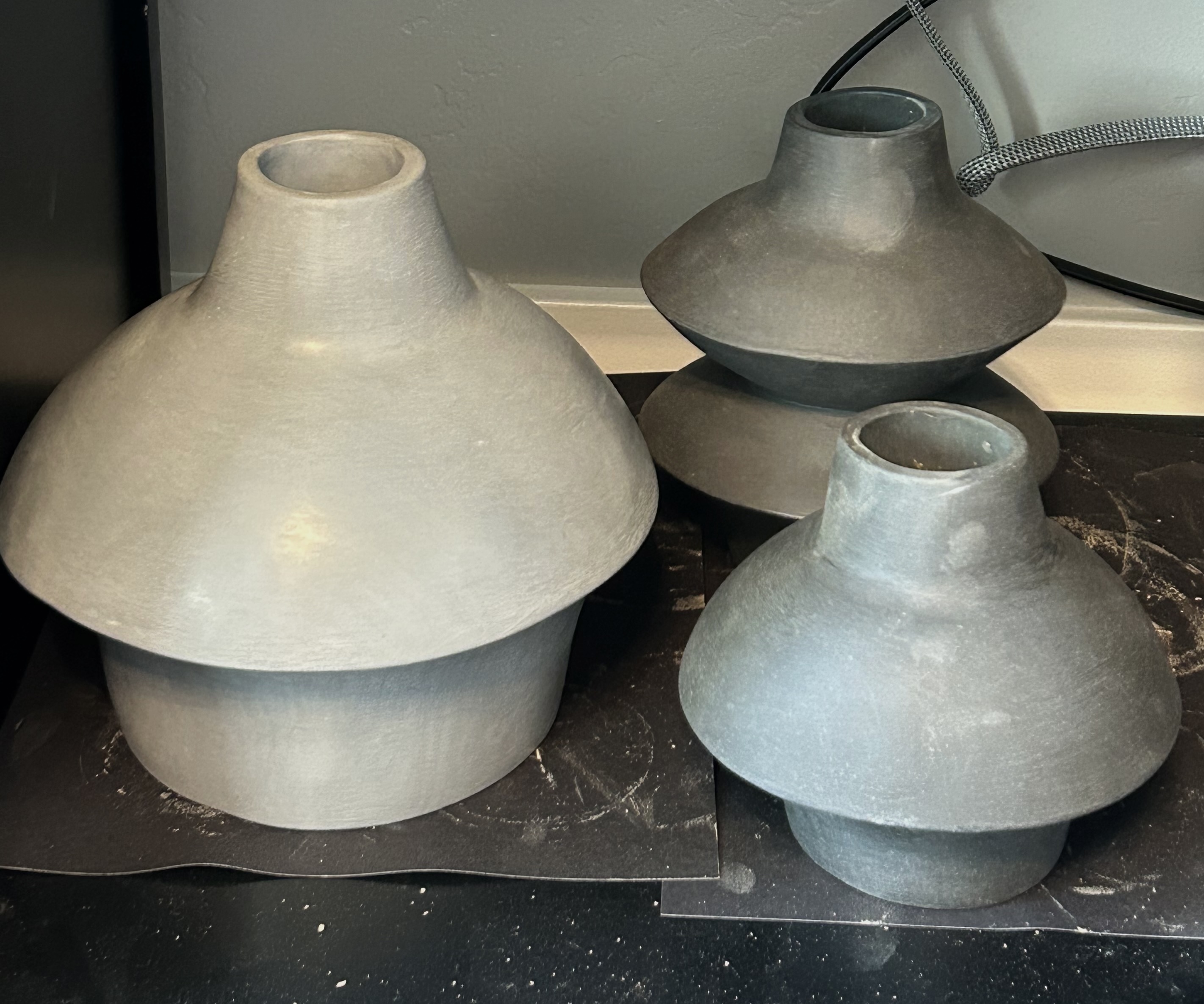
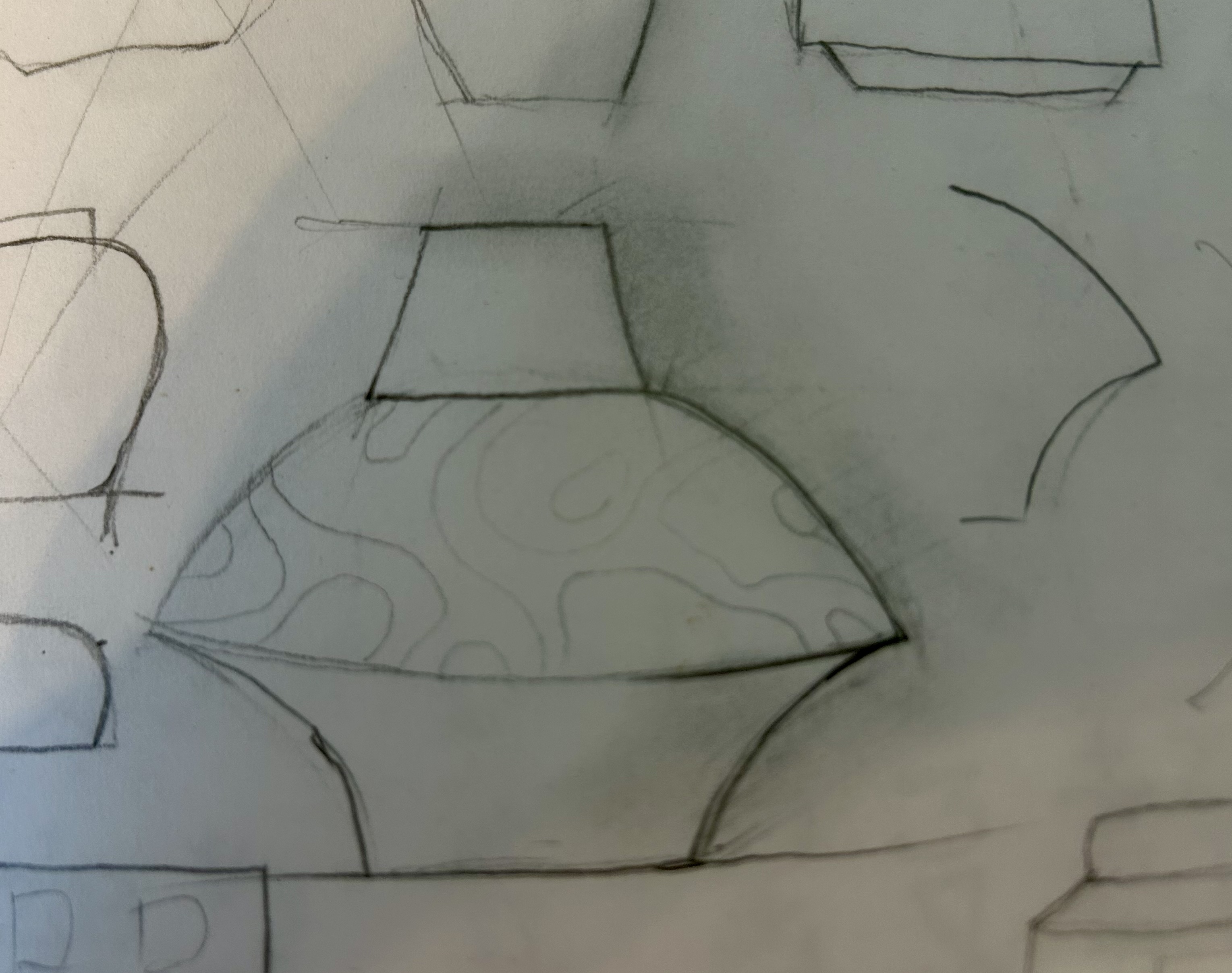
The exhibit also includes photographs documenting
the development of the pieces. Images of the
undecorated ceramic forms reveal their underlying
geometry before the application of the finished
surface designs. Preliminary pencil sketches
illustrate the exploration of vessel proportions
and ornamental placement, demonstrating the
connection between initial design and completed
sculpture.
Viewed together, these stages reveal a process in
which form and ornament are developed in dialogue
with one another. The shape of each vessel provides
a structure for the decorative composition, while
the patterns alter the viewer's perception of its
proportions, contours, and visual weight.
Tribal Jugs represents an investigation of
ceramics as both sculptural form and graphic surface.
Through a restrained palette, assertive geometry,
and the interplay of repeated motifs, the collection
transforms a familiar vessel type into a series
of distinctive ornamental objects.